|
Barath Chandran.C 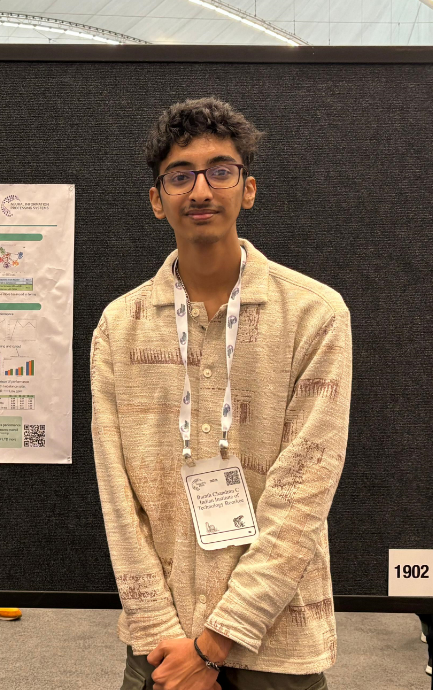 Refresh the page to Monte carlo sample a new Barath instance.Guess why its a markov chain.
I am a graduating senior year undergraduate at Indian Institute of Technology Roorkee in India, majoring in Electronics and Communications Engineering. But ironically,
I'm more involved in research on Deep Learning, particularly honing my knowledge in Generative Modeling, Reinforcement Learning, and Computer Vision.
Previously I was a remote research Intern at the CogAI4Sci Lab at the National University of Singapore,
where I worked on some fascinating problems in discrete diffusion for protein structures and tackling
hallucinations in image diffusion models. I spent August 2025 as a Visiting Scholar there, collaborating
with Dr. Dianbo Liu and Dr. Srinivas Anumasa, which was an incredible learning experience that
pushed my understanding of the principles and uses of score based models.
|
Refresh the page to Monte Carlo sample a new Barath instance. Guess why its a Markov Chain.
|
Research InterestsOn the research side I am currently interested in the following questions around Generative Modelling, Probabilistic Inference and AI4Science:
|
Education/Experience
|
BC'log |
|
|
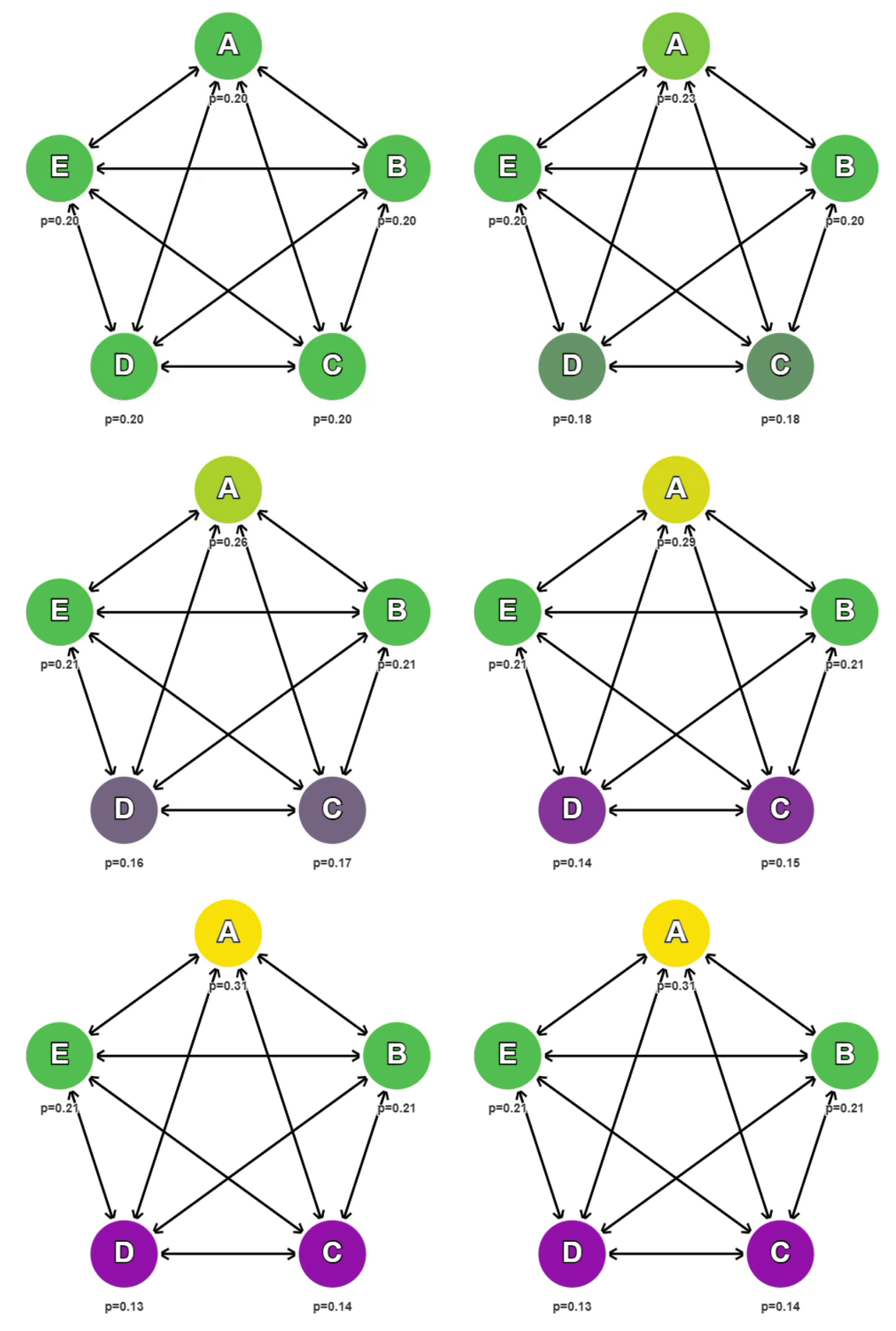
On Designing Discrete Space Diffusion
Barath Chandran.C, Blog post Based on the papers Score Entropy Denoising Diffusion and Discrete Denoising Diffusion Probabilistic models I attempt to combine both these papers to give a coherent view of how mathematically viable discrete space diffusion models- their training and their inferences- are designed. |
|
A Variational Perspective to Diffusion Schrödinger bridges
Barath Chandran.C, Blog post Based on the paper "Schrödinger bridge-type diffusion models as an extension of variational autoencoders" I attempt to show how diffusion Schrödinger bridges can be seen as an extension of variational autoencoders. Along the way, we also obtain a much more straightforward derivation of the ELBO of SB model. |
Publication |
|
|
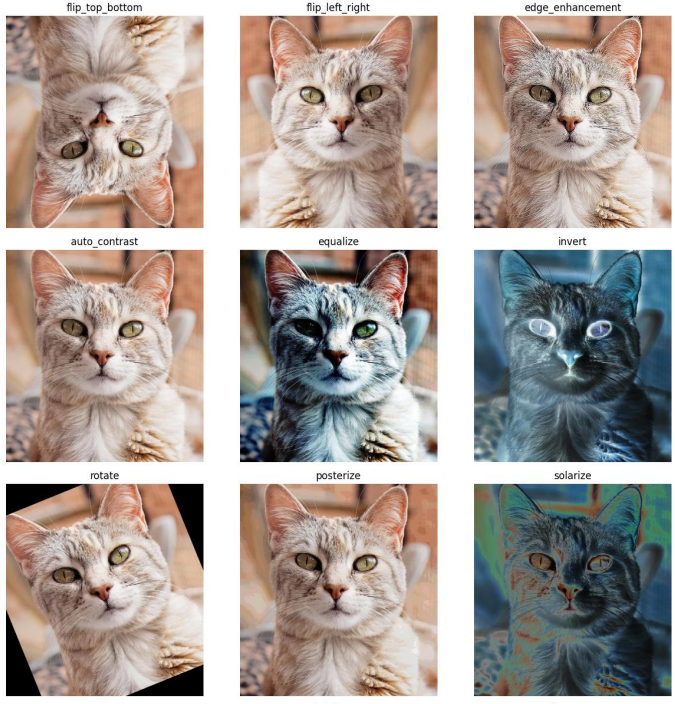
[Re] CUDA:Curriculum of Data Augmentation for Long-tailed Recognition
Barath Chandran.C, TMLR, 2024 (presented at NeurIPS,2024) Open Review Reproducing the studies of the original paper on a data augmentation algorithm/curriculum for image recognition models fine-tuned to long-tailed (heavily class-imbalanced) datasets. Extended the study to analyze how the algorithm improves the Latent representation Space of Imbalanced datasets. |
|
Data-Dependent Smoothing for Protein Discovery with Walk-Jump Sampling
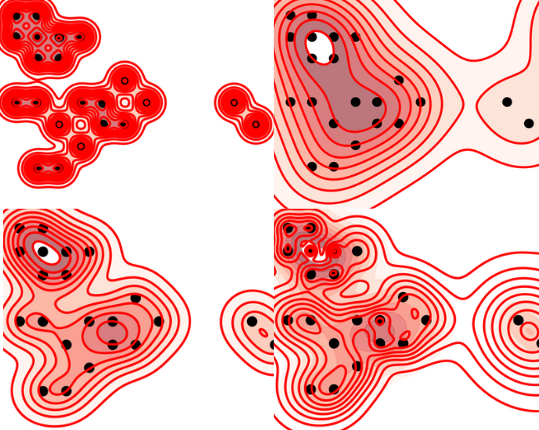
Srinivas Anumasa, Barath Chandran.C, Tingting Chen, Dianbo Liu AI4Sci workshop, NeurIPS, 2025 Open Review Applying a data-dependent noise scale for the Gaussian noise, inversely proportional to the Kernel Density Estimate, to improve the inferred probability landscape in the Walk Jump sampler for ab initio protein discovery. Introduced a kernel density dependent noising instead of the uniform noising for the walk and jump model.Improved the discovery of novel protein sequences and coverage of the real manifold |
Research based | |
|
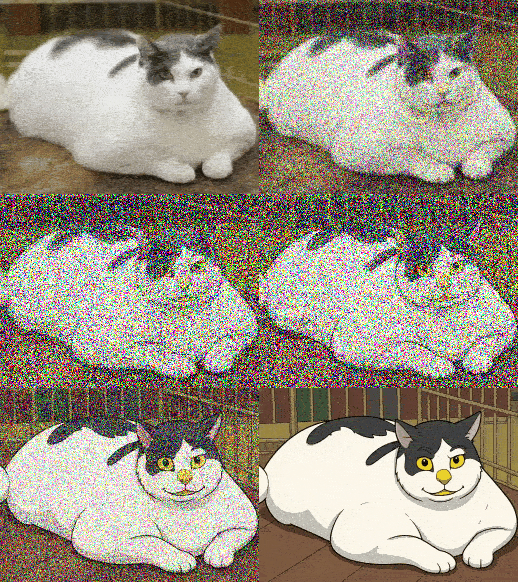
Laplacian Score Sharpening for Mitigating Hallucination in Diffusion Models
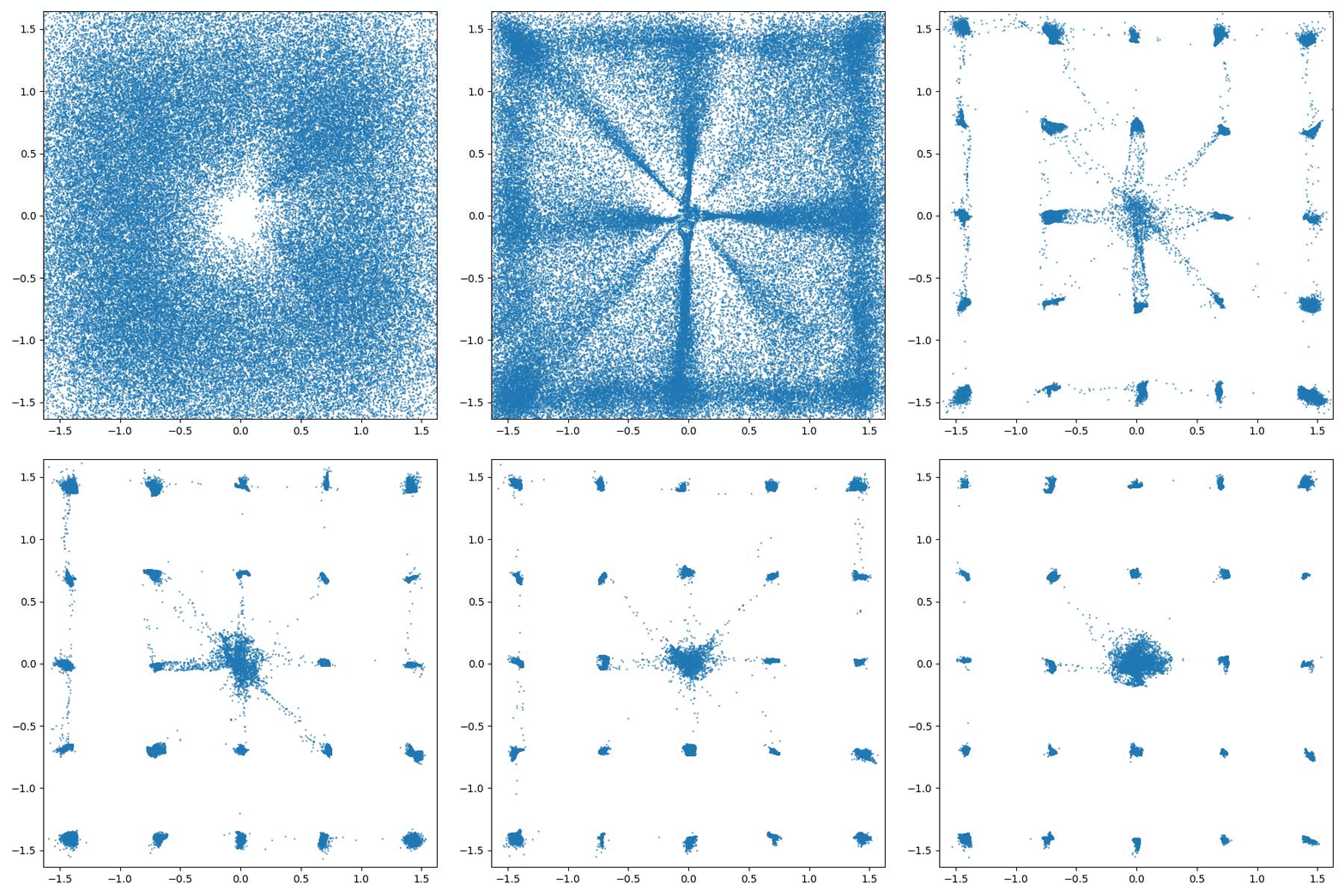
Barath Chandran.C, Srinivas Anumasa, Dianbo Liu Submitted to SPIGM workshop NeurIPS 2025 Rejected paper A post-hoc adjustment to the score function during inference that leverages the Laplacian (or sharpness) of the score to reduce mode interpolation hallucination in unconditional diffusion models across 1D, 2D, and high-dimensional image data. |
|
Arnold's Qr: in-Process watermarking scheme for Diffusion Models
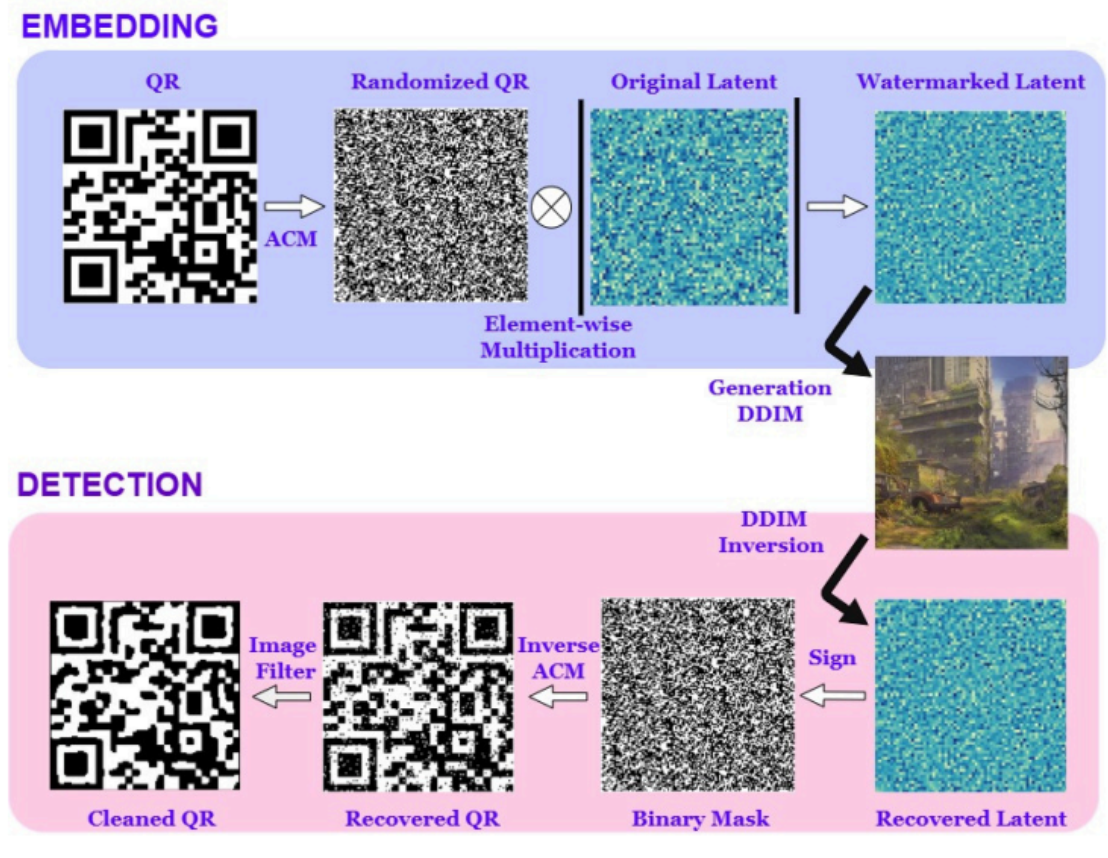
Atharva Nandakumar Sonare, Barath Chandran.C, Vindod Pankajakshan LBP, Feb-Apr 2025 Poster A watermarking scheme operating on the latent noise space of image diffusion models, improving detection through error correction capability of QR code while maintaining imperceptibility through Arnolds chaotic encryption. |
|
Rethinking Metrics for Plug-and-Play Image Watermarks
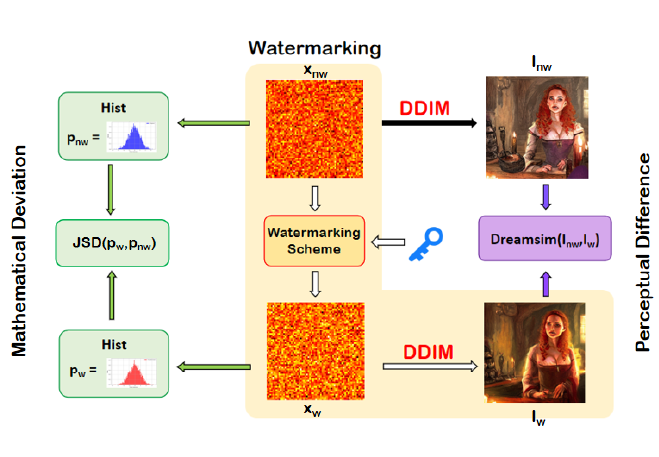
Barath Chandran.C Submitted to gen AI watermarking workshop ICLR 2025 Rejected paper Framework to evaluate the plug-and-play compatability of image watermarking schemes operating on Latent Noise Space. |
Coding Based |
|
|
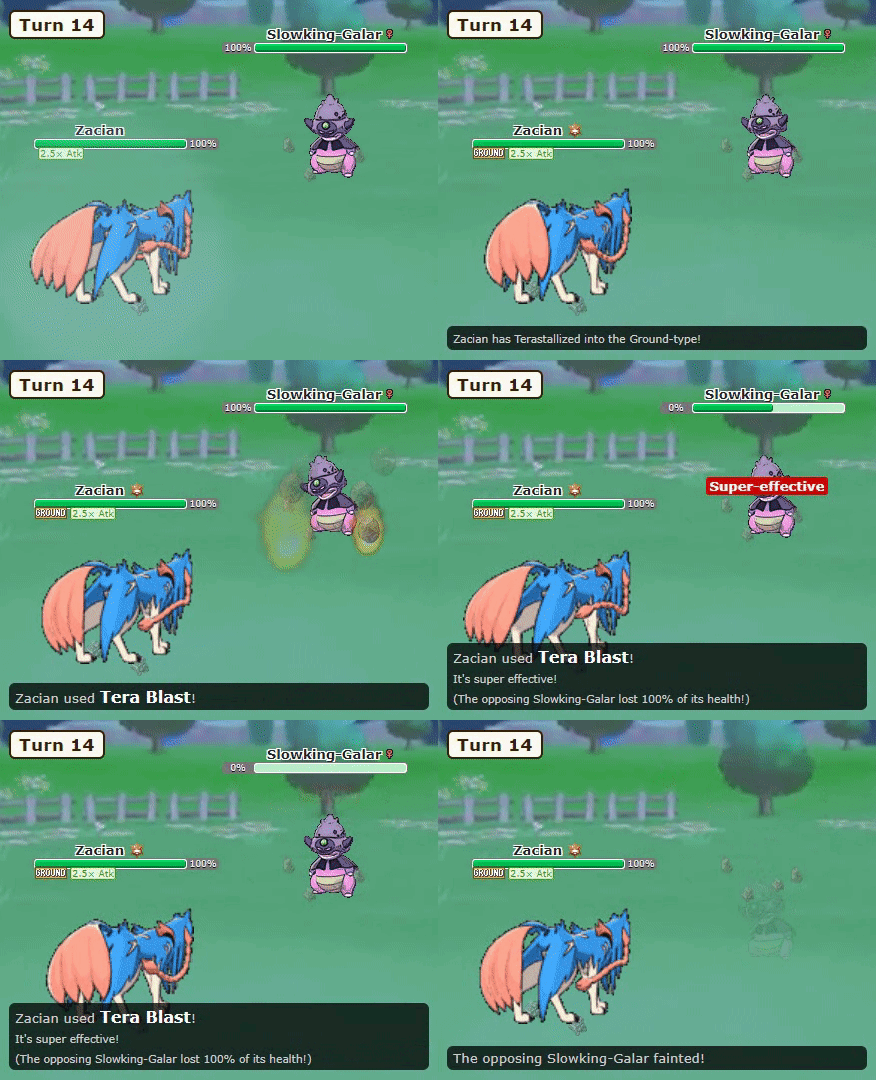
Pokemon Showdown Bot with Deep Reinforcement Learning
Barath Chandran.C, Tushar , Pranjal Gautham, summer,2024 Project repo Developed a bot capable of playing against humans in the online game pokemon showdown using PPO, FC Actor Critic Network and Reward shaping. |
|
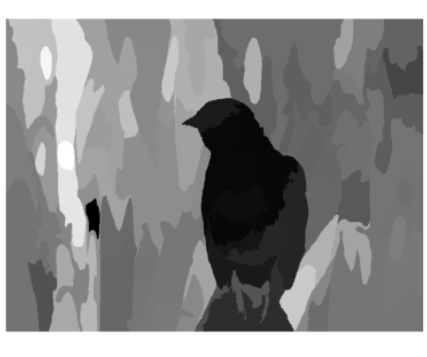
Extended Fast Defocus Map Estimation
Barath Chandran.C, Aditya Kora, Fall, 2024 Project Repo A pipeline to recover a dense defocus map(depth map) from a given image using photogametry following the paper "Fast Defocus Map Estimation", improved the quality and speed of the algorithm using SNIC for clustering. |
|
Thank you Jon Barron for the website's source code and Homanga bharadwaj on whose site I first saw this design. |